
HOW-TO
Staining With A Purpose

HOW-TO
Staining With A Purpose
Staining With a Purpose
Staining with a purpose includes keeping the environment in mind. There are three steps to this: buying only what you need, reusing where possible, and safe disposal.
Buying What You Need
You would not throw away a screwdriver after you use it, so why throw away your staining tools? Select applicators tools mindful of what can be re-used or recycled, instead of being thrown out. Good tools and applicators can be reused many times - saving money and time spent shopping for new tools, as well as helping the environment by generating less waste.
Staining Tools:
Investing in high-quality pad applicators and brushes will save time and money. They are more efficient when applying stain and can be rinsed and reused. Cabot makes a high-quality pad applicator and brush for exterior staining application that can be used over and over for years.
For outdoor projects, protect grass, bushes and flowers around your project by covering with a canvas drop cloth, even during cleaning steps. Covering cement and concrete or brick surfaces is also a good idea to prevent stain from penetrating those surfaces.
Buy Heavy plastic drop cloths to protect the area where you are working. These can be re-used again and again for many years on different projects.
If you are using a water-borne or acrylic stain, go without a liner. This is the environmentally preferred way to go if the tray can be immediately rinsed after use. If you do use a liner, be sure to rinse it out and reuse or recycle it. On the other hand, if you are using oil-based stain then using a tray liner is the best bet. Let the stain dry in the tray liner, and throw away the liner in your regular trash.
Rags and sponges- Use a rag for drips and spills instead of paper towels. For water-borne or acrylic stain projects, rinse the wet stain out in regular water. Once rinsed, rags can be put into the washing machine for a thorough cleaning (make sure rags are thoroughly rinsed of stain and residue). When working with oil-based products, use caution. Rags, steel wool or waste soaked with oil-based products may spontaneously catch fire if improperly discarded. Immediately after each use, place rags, steel wool or waste in a sealed, water-filled metal container. Dispose of according to local regulations.
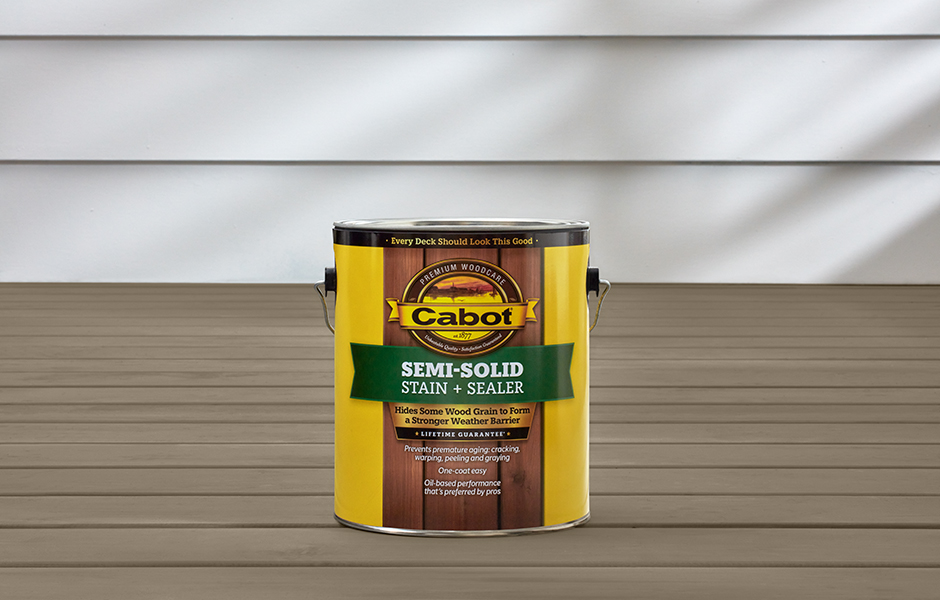
Choose waterborne products where they are available in your area. Cabot products meet all federal, state and local VOC regulations.
For exterior projects, consider using stain with a more solid opacity. Solid color stains are more durable than semi-transparent stains for example. It saves you time and money in the long run, and you generate less waste in empty cans. Stains with more solid color hide more of the wood grain. Learn more about opacity.
Safety Data Sheets are available for all our products. The is a document required by governments in the US and Canada to describe the contents of a chemical product and what to do in an emergency.

For most stain projects, calculating involves multiplying the length by the width to get the number of square feet. Match that against the typical coverage of the product. You may wish to round up to the next full container, especially for products with color, since colors can vary slightly from container to container. If you do have to return to the store for more product, look for the same batch number on each package.
PREPARING THE SURFACE
Consider buying concentrate Cleaners and mix with water in your own sprayer to reduce the size of the container that goes into your trash. Be sure to rinse with clean water after washing with cleaners to remove any residual cleaner.
After use, Cabot cleaner packages can be rinsed and recycled. Power washers can clean deck, fence and siding surfaces with plain water. Use a fan tip and read all directions carefully. That will save you water usage and prevent damage to the wood.
CLEAN UP
Follow the directions on the label for tools and applicators used.
PAD APPLICATORS:
With water-borne or acrylic based stains, and before the stain dries on the applicator, rinse the pad in water. Rinse until the water is clear. Let dry.
Use caution when using paint thinners, and always follow instructions on the package. After use, paint thinner can be stored in a glass or metal container and used again.
BRUSHES:
With water-borne or acrylic stains, remove most of the excess in a bucket or container while the stain is still wet. It is much more difficult to remove dried stain with soap and water. Wash off the remaining stain under running water.
For oil-based stain brushes, follow the brush manufacturer's instructions to select the proper cleaning solvent (mineral spirits or paint thinner, etc.) Pour the cleaning solvent into a small container. Dip the brush into the solvent, working the thinner through the brush bristles, dipping up and down in the container several times. Repeat this process using a clean container and clean thinner. Allow the brush to air dry by hanging the brush with the bristles down to maintain its shape. Combine cleaning solvent containers for future use.
Place brush or pad applicator in a plastic bag for storage to prevent drying out and re-use the next day.
REUSE WHERE POSSIBLE
In order to help the environment in which you live and meet local ordinances, we offer a number of easy and earth-friendly answers to the question, “What do I do with the leftover stain?”
USE IT UP
When your staining project is completed, simple suggestions for using extra stain include:
- If a small amount is left over, use it on the job.
- Keep small amounts for touch-ups.
- Give your left-over stain to a neighbor who has a small staining job.
- Donate stain to charities (for example, Habitat for Humanity), church groups, community groups, theater groups, schools, a neighbor, etc.
STORING STAIN
- If you decide to keep your leftover stain, here are some useful suggestions:
- Properly seal the can. Make sure that you wipe excess stain from the rim of the can. Store stain where temperatures are moderate. Temperature extremes may affect stain so that it will not be usable. Do not allow stain to freeze. Extreme heat and cold will affect how well the stain works. It is especially important to keep oil-based products away from high heat.
- Keep stain in a safe location - away from children and pets.
- Mark the lid of the can with a description of where the product was used and what year it was applied, such as “Backyard fence 2010”
SAFE DISPOSAL
In order to make the most efficient use of landfills and to keep ground water and soil environmentally safe, we recommend the following tips:
- Check local ordinances and waste hauler regulations.
- Read product package for instructions for proper disposal.
- Dry water-borne or acrylic stains can be thrown out with your regular household trash, if thoroughly dried.
If there is less than ¼ can of stain remaining, remove the lid and place the can in a well-ventilated area. The stain will dry in a few days or for larger volumes of stains, allow a longer drying time.
- You can also add shredded newspaper, sand, sawdust, cat litter or paint solidifier to the can of a water-borne or acrylic product. The stain must be completely dry before disposal. Do not use this tip with oil-based stains or finishes.
- Another way of drying out water-borne or acrylic stain is to punch holes in the top of the can and leave the can in a dry area to let the stain dry for a couple of weeks.
- For water-borne or acrylic stains, lids should be removed from cans before they are put in the trash to let waste haulers know the container is dry.
- Oil-based stains and finishes are generally considered hazardous waste. Check with local ordinances and read label instructions before disposal. Only dispose through your local designated household hazardous waste programs.
GENERAL RULE
Check your local ordinances or your waste hauler to see what is allowed in your area. Have the product package with you when you call.
RECYCLING CANS
The containers of cleaners or water-borne or acrylic stains can be recycled. Recycling metal and plastic cans should always be considered to reduce landfill usage.
Cans should be thoroughly clean and dry. Metal cans are recyclable. Plastic cans may be recyclable if your waste hauler accepts them.